
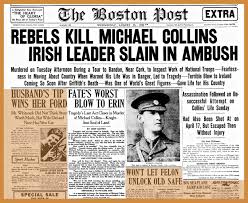
Guerilla warfare became the defining characteristic of the Irish Civil War (1922–1923) because it was the only viable strategy left for the Anti-Treaty IRA (the “Irregulars”) after they lost control of Ireland’s major cities.
While the conflict began with conventional street fighting—most notably the Battle of Dublin—it quickly devolved into a hit-and-run campaign.
Why Guerilla Warfare Was Used
The shift to guerilla tactics wasn’t necessarily a choice; it was a tactical necessity born from a massive power imbalance.
-
Conventional Defeat: In the early weeks of the war, the National Army (Pro-Treaty forces) used British-supplied artillery to drive the Anti-Treaty forces out of fixed positions in Dublin and the “Munster Republic.”
-
Resource Disparity: The National Army had armored cars, planes, and thousands of uniformed soldiers. The Anti-Treaty IRA lacked the heavy weaponry to hold territory, so they retreated to the mountains and countryside.
-
Familiarity with the Method: Many IRA fighters had just spent years using guerilla tactics against the British in the War of Independence. They knew how to ambush convoys, cut telegraph wires, and disappear into the local population.
The Impact on the War
The adoption of guerilla warfare changed the conflict from a standard “war of fronts” into a grinding, bitter war of attrition.
1. Sabotage and Economic Warfare
The Anti-Treaty forces focused on making the new Irish Free State ungovernable.
2. The “Flying Columns”
Small, mobile units known as Flying Columns lived off the land and launched surprise attacks on National Army patrols.
3. Increased Brutality
Guerilla warfare is personal and messy. Because the “enemy” didn’t wear uniforms and lived among the people, the National Army became increasingly paranoid. This led to a “tit-for-tat” cycle of violence, including extrajudicial killings and the infamous Ballyseedy Massacre
The Consequences
The consequences of this style of fighting were profound and lasted long after the “dump arms” order in May 1923.
| Area of Impact | Consequence |
| Political | The government passed the Public Safety Bill, allowing for the execution of prisoners. 81 official executions took place, leaving a legacy of bitterness. |
| Economic | The war cost the Free State roughly £30 million, a staggering sum that crippled the new nation’s ability to invest in social services. |
| Social | It tore families and communities apart. Neighbors who had fought together against the British were now assassinating each other in the same lanes and fields. |
| Military | The National Army grew to nearly 60,000 men to combat the guerillas, creating a massive post-war problem of how to demobilize a huge army in a tiny economy. |
The Verdict: While guerilla warfare allowed the Anti-Treaty IRA to survive much longer than they would have in a head-on fight, it ultimately failed to win public support. The chaos and destruction alienated a civilian population that was desperate for peace after years of conflict.