The period from 1924 to 1929 in Germany is frequently referred to as the “Golden Twenties” (Goldene Zwanziger). It was a time of relative stability sandwiched between the hyperinflation of 1923 and the Great Depression of 1929.
Whether it was “truly” golden, however, is a subject of intense debate. While the surface glittered with jazz and new technology, the foundations were often fragile.
1. The “Golden” Successes
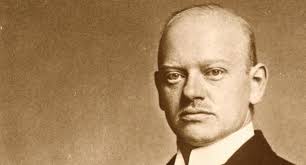
During these five years, Germany underwent a remarkable transformation under the leadership of Foreign Minister Gustav Stresemann.
Economic Recovery
-
Currency Stabilization: Stresemann replaced the worthless Papiermark with the Rentenmark, effectively ending hyperinflation.
-
The Dawes Plan (1924): This agreement secured $800 million in American loans to stimulate German industry. It also restructured reparations to make them more manageable.
-
Industrial Boom: By 1928, German industrial production finally surpassed pre-WWI levels. Real wages rose, and the standard of living for many urban workers improved.
Foreign Policy and Diplomacy
-
Locarno Pact (1925): Germany agreed to its western borders with France and Belgium, signaling a shift toward peace.
-
League of Nations (1926): Germany was admitted as a permanent member, restoring its status as a “Great Power.”
-
Kellogg-Briand Pact (1928): Germany joined 61 other nations in a symbolic renunciation of war.
Cultural Flourishing
Berlin became the “cultural capital of Europe.” This era saw the rise of:
-
Modernism & Bauhaus: Revolutionary architecture and design focusing on functionality.
-
Cinema & Art: Masterpieces like Fritz Lang’s Metropolis and the “New Objectivity” art of Otto Dix.
-
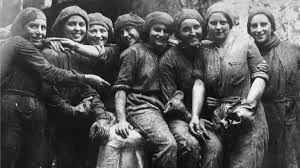
Social Liberation: A boom in nightlife, cabaret, and the emergence of the “New Woman”—women who worked, voted, and enjoyed more social freedom.
2. The “Rotten” Foundations
Despite the progress, several underlying issues suggested that the “Golden Age” was an illusion—or, as Stresemann himself put it, Germany was “dancing on a volcano.”
Economic Fragility
-
Dependence on Loans: The entire recovery relied on short-term American loans. If the US recalled those loans (which they did in 1929), the German economy would collapse.
-
The Agrarian Crisis: While cities boomed, the rural peasantry suffered. Falling food prices meant farmers were in deep debt, driving them toward political extremism.
-
Unemployment: Even at the peak of “prosperity,” unemployment never fell below 1.3 million, and it reached nearly 2 million by 1929.
Political Instability
-
Weak Coalitions: No single party could ever win a majority. The government was a revolving door of weak coalitions that argued over trivialities, such as which flag to fly.
-
Hindenburg’s Presidency (1925): The election of Paul von Hindenburg—a monarchist and war hero—showed that many Germans still longed for the old authoritarian days rather than the new republic.
-
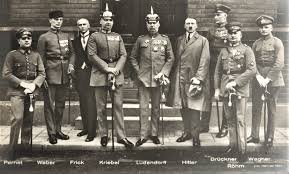
Extremism on Ice: The Nazis and Communists didn’t disappear; they simply reorganized. Hitler used these “quiet years” to rebuild the Nazi party into a national machine.
3. Conclusion: “Golden” or “Borrowed” Time?
The period was “golden” primarily in comparison to the chaos that came before and after it. For the urban middle class and intellectuals, it was a time of unprecedented freedom and excitement.
However, for a significant portion of the population—farmers, the elderly whose savings were wiped out in 1923, and the staunchly traditional—the era felt decadent and unstable. Historians often conclude that it was not a true recovery, but a “borrowed time” that lacked the deep-rooted public loyalty needed to survive a major crisis